
OEM Kia Timing Belts For All Models


Timing Chain


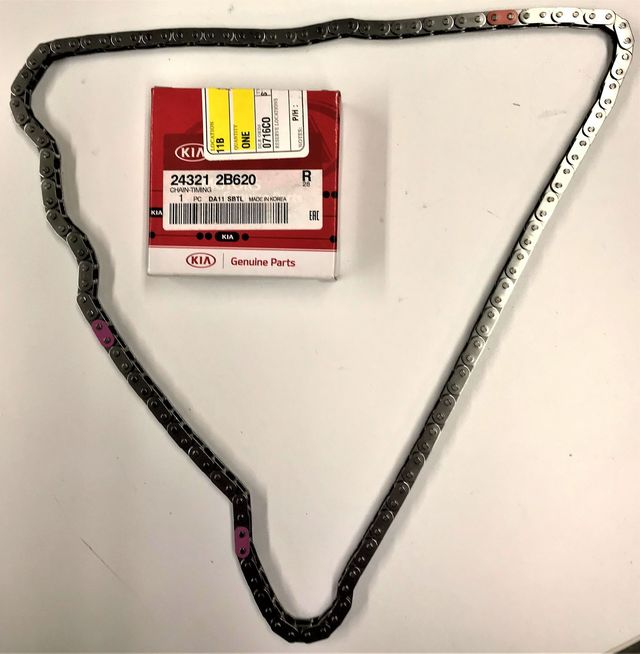
Timing Chain


Timing Chain

No results found for "timing belt". Here are some helpful search tips:
- Search by a part name. Example: water pump.
- Be less specific. Example: brake instead of ceramic brake.
- Remove information such as make, year or model.
- Can't find the part you are looking for? Contact us and we'll find it for you!
TL;DR Summary
A Kia timing belt helps synchronize internal engine movement on engines equipped with one. Replacing it on schedule with a genuine Kia part helps protect engine performance and fitment accuracy.
Important Engine Maintenance for Compatible Kia Models
Not every Kia uses a timing belt, but for engines that do, the belt is a critical maintenance part. It helps keep the crankshaft and camshaft moving in proper timing. If a timing belt wears, cracks, stretches, or fails, engine performance can suffer, and damage may occur depending on the engine design.
What This Category Includes
- OEM Kia timing belts
- Engine timing maintenance parts
- Model-specific belt options
- Related engine service components
Why Kia Genuine Parts Matter
Timing belt fitment must be precise. Genuine Kia timing belts are designed for compatible Kia engines. They may be replaced alongside related belts and hoses, engine parts, or Kia Soul timing belts where applicable.
How to Choose the Right Part
Check whether your Kia engine uses a timing belt or timing chain. If it uses a belt, follow the factory maintenance interval. Use your model, year, engine, trim, and VIN to confirm the correct replacement part.
Compatibility and Fitment Guidance
Timing belt specifications vary by engine. Because this part is tied directly to engine timing, fitment should be verified carefully before installation.
Key Takeaways
- Timing belts are critical on engines equipped with them.
- Not all Kia engines use timing belts.
- Replacement should follow the service schedule.
- OEM fitment supports proper engine compatibility.
FAQ
Does every Kia have a timing belt?
No. Some Kia engines use timing chains instead, so check your specific model and engine.
Why is timing belt replacement important?
A worn timing belt can affect engine timing and may lead to serious problems if it fails.
How do I find the right timing belt?
Use your VIN or exact model, year, engine, and trim to confirm compatibility.